Abstract:
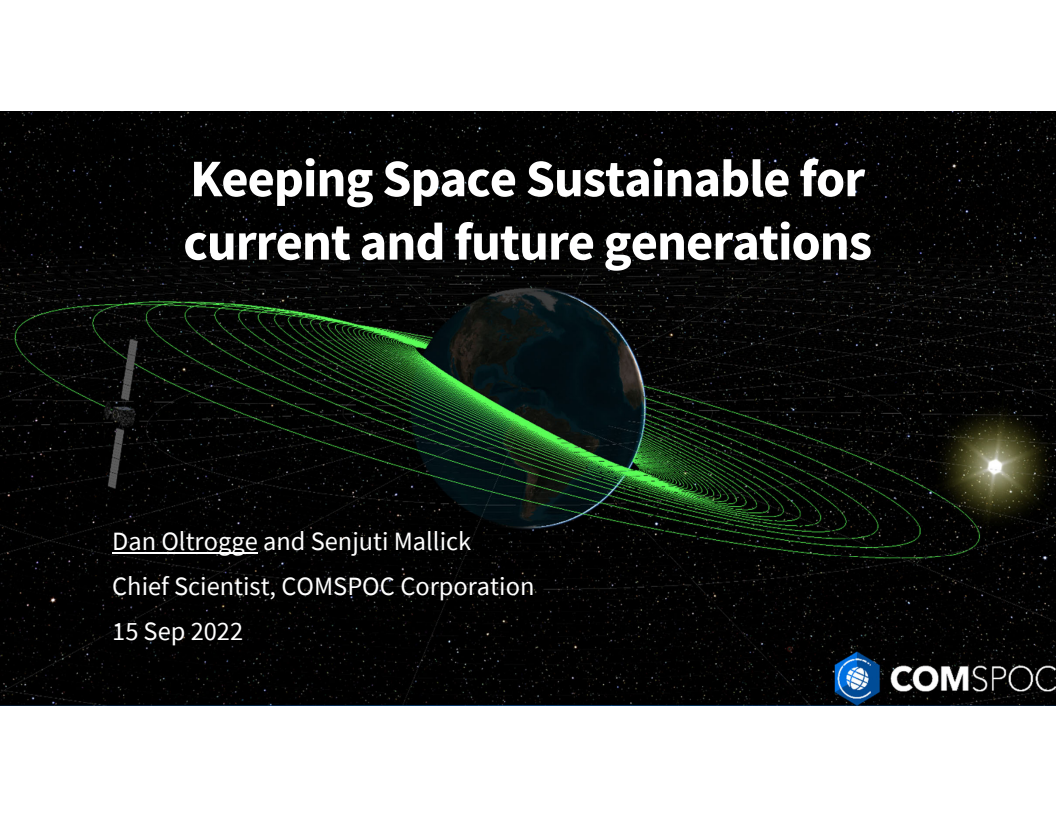
This work examines the growing challenges to long-term space sustainability driven by antisatellite (ASAT) tests, fragmentation events, and the rapid expansion of large commercial satellite constellations in low Earth orbit (LEO). It documents sharp increases in resident space objects, close conjunctions, and collision risk, highlighting how recent ASAT events have created persistent debris fields that elevate operational hazards across key orbital regimes. Using quantitative analyses of encounter rates, fragmentation outcomes, and constellation growth projections, the study shows how the “New Space” era has dramatically increased congestion and complexity in space operations. The presentation emphasizes the limits of legacy Space Situational Awareness (SSA) systems and demonstrates the value of multi-source data fusion, advanced analytics, and collaborative data sharing to improve orbit accuracy and flight safety. It further outlines the roles of international organizations, national regulators, industry, and academia in promoting responsible behavior through standards, guidelines, and best practices. The work concludes that sustaining the space environment for future generations requires coordinated global action, robust SSA foundations, and an integrated approach to Space Traffic Management and Space Environment Preservation.
Keywords:
Click a keyword to filter the list of related assets below.
Oltrogge, D.L., “Keeping Space Sustainable for current and future generations,” Space Generation Advisory Council (SGAC) Conference, Paris, France, 14 Sep 2022.